Growing eco-tourism in the Philippines
Australian volunteer Clare MacNish shares shares her experience volunteering in sustainable tourism in Victorias City.
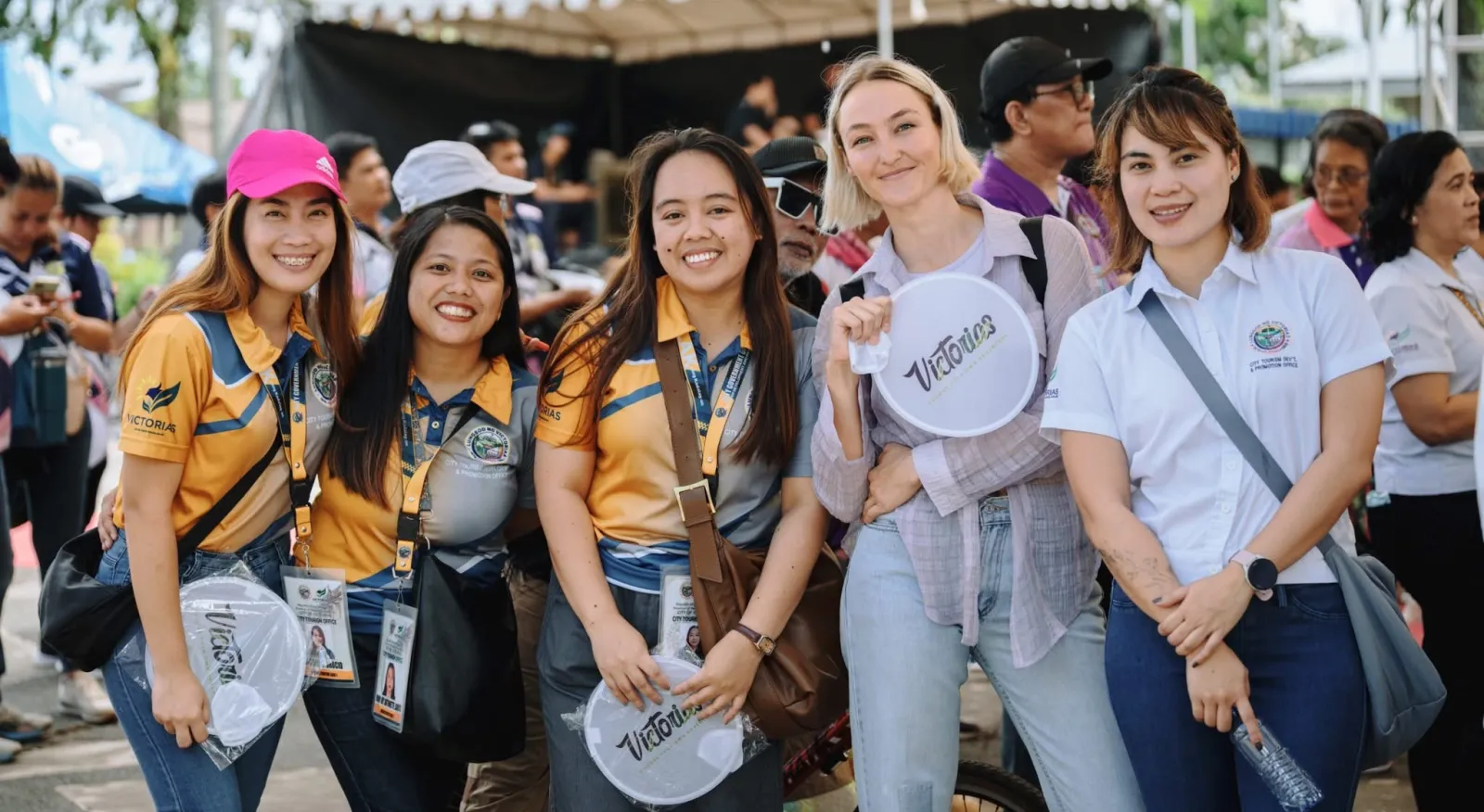
Local tourism development in the Philippines strengthens the economy, creates jobs, and protects cultural heritage. The City Government of Victorias' Tourism Office promotes community-led, sustainable tourism, focusing strongly on agricultural and ecotourism initiatives.
Australian volunteer Clare MacNish has been instrumental in her volunteer role as Sustainable Ecotourism Officer at the organisation, supporting the team’s efforts in making tourism more organised, inclusive, and sustainable.
Feedback from her colleagues highlighted that Clare’s success stemmed from her listening deeply, understanding the local context, and learning the dialect to build strong community connections.
In her own words, find out how Clare’s assignment has impacted tourism in Victorias City and herself.
Tell us about your assignment in the Philippines…
I worked in a regional city that had budding ecotourism sites that [the local government] wants to develop more, bringing in strategies that are environmentally friendly and ensure that the community is benefiting through livelihood initiatives.
I worked at two main sites. One was the Baybay Mangrove Ecotrail which is managed by the Pasil Fisherfolk’s Association. The other was Gawahon Eco Park, which is managed by the local government and home to a small farming community in the foothills of a mountainous area. These were two very different environments, but both have a lot of potential for ecotourism.
I worked on a lot of different projects throughout the year, and each required different daily activities. A lot of my time was spent in the office with the team, doing research, writing proposals, [and] developing training materials.
The best days were when we would all go into the community and run the workshops, events or do project design-thinking sessions.
What are the goals and mission of your partner organisation?
Through working with the community, they want the community to be more empowered to manage their own sites and generate income. They want to encourage skill development, capacity building and livelihood opportunities for the farmers and fisherfolk, both of which are very marginalised.
There is a lot of potential for tourism in Victorias City, but it has been hard to develop with limited resources. I was brought in as a fresh set of eyes to look at what was there and what we could come up with together. Having me there was a driver to prioritise the ecotourism projects.
What did you and your colleagues achieve together?
We had an office of primarily women [and] it was great to go to an office each day filled with smart, passionate women.
It was hard at times because it operated so differently to offices I’m used to from Australia. It took a while to get into the groove and trust each other.
As a team, although it wasn’t perfect all the time, we achieved a lot together and none of it would have been possible without the help of every single person in the office.
What was your favourite project that you worked on?
My favourite project was Paddle with a Purpose. In community meetings and chats about the mangroves, something that kept coming up was a problem with rubbish, the lack of tour guides, and the fact income was tied to guest volume and infrastructure. We thought about different tours we could run and how we could incorporate environmental outcomes into those tours – we landed on a kayak clean-up tour.
In other parts of the Philippines, community groups have successfully implemented kayak tours, which, when managed responsibly, have a minimal environmental impact. The Pasil Fisherfolk’s Association liked the idea.
I found the Marine Conservation Philippines who gave us a small startup grant. With this, along with support from the Victorias City Environment Department, we were able to get two double kayaks, life jackets, equipment to set up a tour hub and fly two KayakAsia: Philippines trainers in from Bohol. We trained four young people from the Fisherfolk’s Association to become tour guides, providing them with official Recreational Kayaking certifications. It was a such a fun weekend. Most of the community had never seen a kayak before, and everyone came down to watch and cheer on the maiden voyage!
The new kayak guides were unemployed at the time and some had left school early due to financial hardship; their new roles will provide them with direct income and an opportunity to share their knowledge of the mangrove area and how we can protect it with guests.
A one-hour tour can bring in the same amount of income as hiring out a hut for a day, so instead of building more huts and risking damaging the mangroves, the community can run a tour which includes picking up rubbish, improving the environment!
The Pasil Fisherfolk were really excited with the project and are very keen to launch it publicly; it really felt like they were driving a lot of the momentum. The concept was embraced especially by the young guides who were chosen to undergo training - you could see their eagerness! Since I’ve been gone, they’ve sent me updates, and they’re hoping to do an official launch later in the year.
Another project that was a success was a proposal for a grant from the Philippines-Canada Partnership on Nature-Based Solutions for Climate Adaptation (PCP4NbS). We worked closely with three community groups and local NGOs in the Gawahon area to create a consortium and develop a proposal to fund a two-year project to expand a women’s association native bee (Kiwot) honey-making business and improve reforestation activities to help mitigate climate impacts such as erosion and landslides along the river.
Just before I left, I was told we’d been successful and were granted AUD$130,000, which will include employing four people to deliver the project.
What inspired you to volunteer as part of the Australian Volunteers Program?
I’ve always wanted to work overseas. Ever since university I’d go on the program website every couple of months, then further into my career it became every week, then every second day. And I thought ‘ok, I need to just do one of these’.
I love the idea of being able to share what you’ve learnt in your career with what other people have learnt in theirs overseas. I wanted that two-way learning experience.
What was the most important thing you learnt from your colleagues?
To take things a little bit slower and build relationships. Coming from a very output focused country like Australia, it was valuable to see the benefits of relationship building in the Philippines and not being so focused on complex timelines.
Working in the Philippines was less emails and Google Meets, and more conversations over cups of native kape and delicious local snacks.
That’s something I want to bring back to Australia – put more effort into slowing down and listening.
What would you say to someone considering being part of the Australian Volunteers Program?
Definitely do it! It was one of the best things I’ve ever done in my life. I have no regrets at all, even though it was tough at times.
I would also say make sure you’re prepared enough to not bail when it gets hard. It’s not a fun holiday, drinking cocktails on the beach - it is work - and that’s what you’re there for. In saying that, it was also great fun a lot of the time!
Another point is to manage your expectations around what you will achieve. Your ego might want to tick all these boxes but that puts pressure on everyone around you. When you’re only there for a year it can be tempting to try to push things through, but it’s not about the glory – things will take a long time, and that’s ok. If you’re doing your job well it should be able to carry on without you there, this is the ultimate goal.